

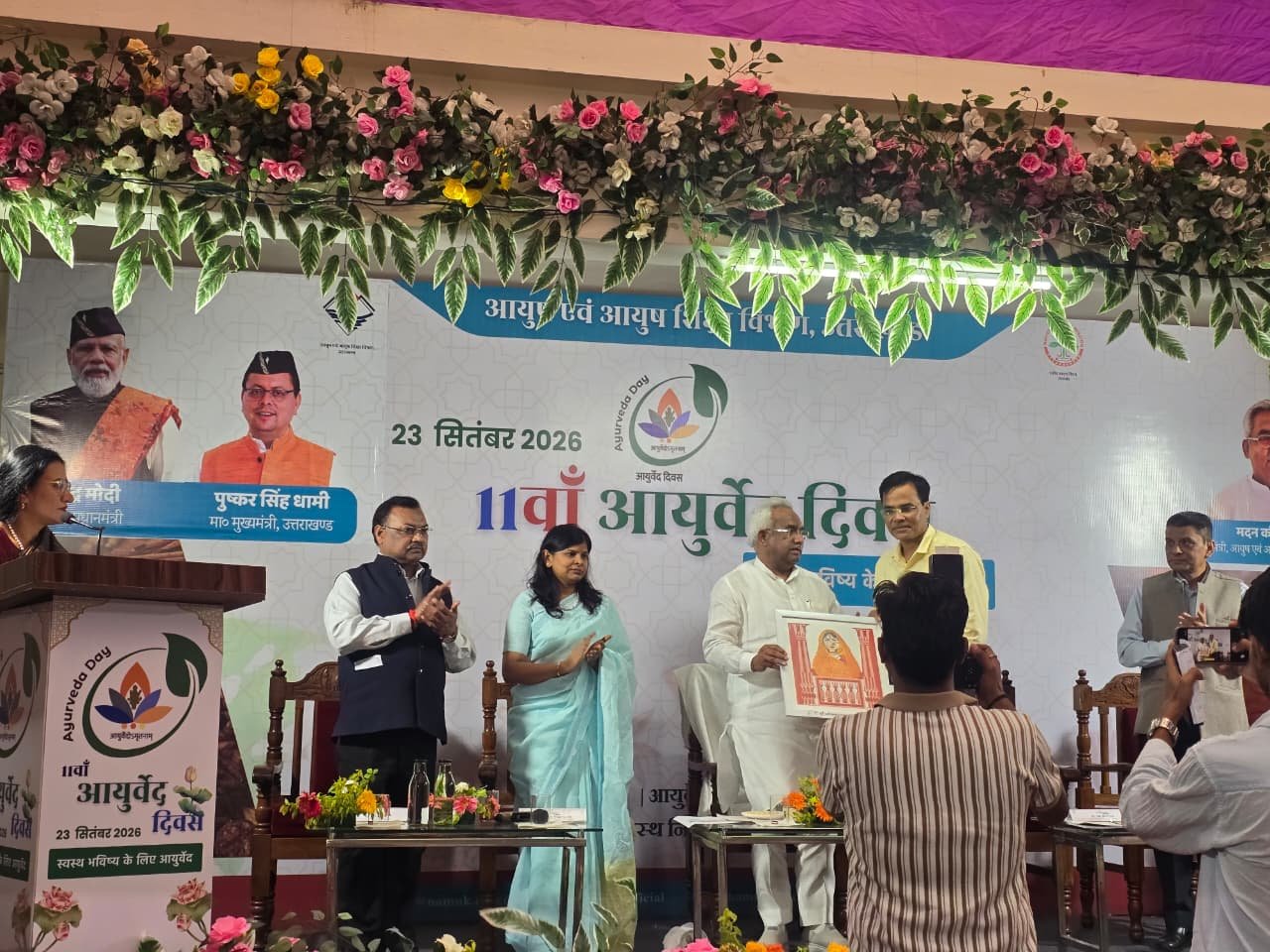
DEHRADUN: National Ayurveda Day was observed at the Directorate of Ayurveda and Unani Services, Uttarakhand, with a special programme highlighting the origins and relevance of Ayurveda in contemporary healthcare.
A special lecture on Lord Dhanvantari Puja and the Advent of Ayurveda was delivered during the programme, tracing the traditional origins of Ayurveda and highlighting its emphasis on preventive healthcare, healthy living and holistic well-being.
Ayush and Ayush Education Minister Madan Kaushik, Secretary Ayush and Ayush Education Ranjana Rajguru, Director of Ayurveda and Unani Services Dr RP Singh, and Joint Director and State Licensing Authority Dr Mithilesh Kumar were among those present. The speaker was felicitated by the dignitaries during the programme.
Senior medical professionals and officials also attended the event, including Dr KS Napchyal and Dr Mahendra Gunjyal, Joint Directors; Dr Alok Kumar, Assistant Drug Controller; Prof Pradeep Bhardwaj; Prof Anup Gakkhar; Dr JN Nautiyal, president of the Indian Medical Council; Dr JL Firmal, Director, Homoeopathy; and Dr Shailendra Pandey, Registrar, Homoeopathy, besides several other guests.
The lecture underlined that Ayurveda is not limited to treatment of diseases but also places emphasis on disease prevention, balanced living and maintaining overall health. Speakers noted that these principles assume greater significance amid changing lifestyles and growing concerns related to preventive healthcare.
The programme concluded with a call to take the traditional knowledge of Ayurveda to a wider section of society. The theme Ayurveda for a Healthier Tomorrow was highlighted as a guiding principle for promoting healthier communities and contributing to a healthier nation.
The gathering also included prayers to Lord Dhanvantari, regarded in the traditional Ayurvedic tradition as the divine source of Ayurveda, with wishes for the health and well-being of society.